rss

100 Days of Something: 47

I haven’t made many field recordings in the last few years. I’m wondering if that fits in with a general trend – it seems like there was a lot more activity in the 00s. Perhaps it’s just a shift of interest on my own part. Chris Watson keeps on doing his thing, for example.

I have found myself listening to the environment a little more during the last months though, and thought it might be nice to include some audio in these notes. I got out my old Sony PCM-D50, recharged some batteries, and hoped to get a recording of the goods train that sometimes passes our apartment late at night. But no goods train, or satisfactory recording of something else. So words instead.
100 Days of Something: 50

A few weeks ago Thomas Basbøll published a final post at Research as Second Language, his Blogger blog, before moving to his own site. That site now has quite a few words on it – paragraphs linked to each other with hyperlinks. It reminds me a little of iA’s dictionary, only purer in that it, as befits the nature of the site, eschews navigation entirely.

I’m struck by how refreshing I find the bare-bones presentation. The content shines.

Here’s an entry that ties in with Lines of Flight – the section on ‘becoming’ from Antjie Krog’s Begging to be Black that I referred to in an earlier post.

100 Days of Something: 51

The BBC Newcastle has had the wonderful idea of documenting ‘a year in the life’ of the city’s town moor, with Chris Watson making sound-recordings and visual documentation by two local photographers. It’s all collected on a web-page on which one can click in on the individual clips. The kind of thing that’s close to my heart.

I do however find myself wishing for a little less voice-over, fascinating as some of the voices are, and a little more space to enjoy the beautiful field-recordings. Interesting as the information is, the speech very quickly transforms the field-recordings into a backdrop for what’s being told. That frustration is heightened on the more compact daily #MinuteOnTheMoor tweets that accompany the project. Those shorter recordings are presented via audioBoom 1 alongside unrelated Kevin Keegan “Top Post” distractions.


  1. What is audioBoom? It’s a platform that “allows for the monetisation of audio via the dynamic insertion of pre and post roll advertising into content as a user is listening, allowing contemporary advertising selection, depending on content genre and geographic location of the user.” Ugh. ↩

100 Days of Something: 53

A lot of talk about artificial intelligence and machine learning recently. A few days ago, while looking through the iA dictionary, I noticed that there’s an entry on it too, with a link to an Aeon article on the metaphors used to explain AI:

“Your brain is not a computer.”

A distinction between machine intelligence and consciousness: Oliver Reichenstein also pointed to another, more convoluted, article on the topic in a series of tweets, and Thomas Basbøll has some thoughts on the “rootedness of experience in the body” too. All of which reminded me of an interview I read a while back – on how we might be able to create a computer that is conscious, but it won’t be a digital one.

100 Days of Something: 54

Last year, during a Frankenstein’s Lab excursion to the Illutron collective, we were introduced to the possibility of making a musical instrument out of a jet motor.

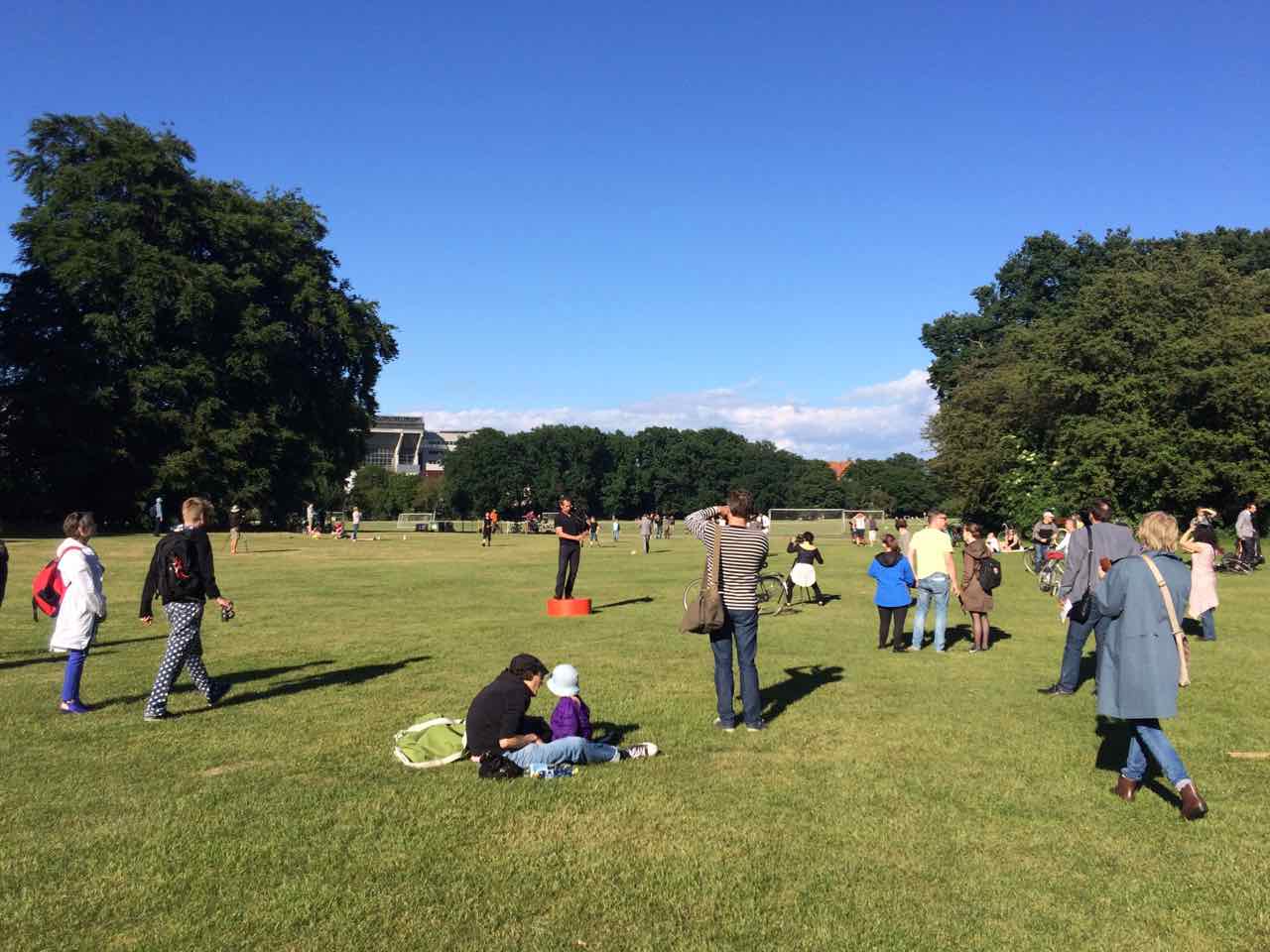
Today Lars Kynde, together with Illutron, presented a Pulsejet Symphony in Copenhagen’s Fælledparken as the opening of Klang Festival 2016. Erwan Keravec played the bagpipes while wandering between three Pulsejet trombones spread out in the park. From where I was standing it sounded something like this:

100 Days of Something: 55

It was Frankenstein’s birthday last Friday. I wrote up a little overview of the last five years on the Frankenstein’s Lab site. Past, present, and future. Looking back and looking ahead.

That got me thinking of the little fredagsbøn that got it all started. At the time I was thinking about the need for open spaces – places that could inspire creative wonder and speak for creativity on a day to day level rather than packing everything into festivals, fine as they can be.

Looking back on that now, and trying to tune in on our current cultural situation, I’m wondering if that’s still how I would articulate what’s needed.

100 Days of Something: 56

Anders Monrad has been channelling his creative energies into apps during the last few years. Virtuoso, an iPhone app, coupled generative audio with visual elements and the iPhone’s motion sensors. He had the good idea of getting percussionist Ying-Hsueh Chen to create some performances using the app – a kind of dance with the iPhone with the graphic component projected as a background. That concept has been expanded upon in Sounding Images #1–6, performed, once again by Ying-Hsueh, at Klang Festival this evening.

100 Days of Something: 57

Late night thoughts a few days into Klang Festival 2016.

Has the Sinfonietta format reached the end of its life? As fantastic as the ensemble of soloists might be, it no longer seems the most suitable place for new pieces. While sinfonietta musicians seem closer to their orchestral cousins, younger groups like Distractfold and Pampelmousse are more like bands. Less tied to repertoire and institutional organisational apparatus, they seem closer to the music they are playing. More aware of considering their concerts as a whole.

Distractfold was awarded the Kranichsteiner prize at the Darmstadt Ferienkurze 2014. A little on them and the shape of todays young ensembles at the end of this RNZ report.

100 Days of Something: 58

Some follow-up on yesterday’s post: Taking a listen to Celeste Oram’s Make it New report on Darmstadt 2014 again, here are the bits I was thinking of:

Celeste describes, at around 19′28″, the young ensembles as a “triple threat”:

Superb performers, with ambitious concepts for new models of musical performance, and their own stable of local composers whose work they champion.

Festival director Thomas Schäfer recognises this:

They are very flexible. They have very good ideas. Their structure is very anti-hierarchical. They are working in another way than ensembles 20–30 years ago.

He also recognises the need for a platform on which this “vivid ensemble scene” can present their art.

Later, at around 70′55″, he asks:

How can we work with the past? If we have a look at the young ensembles’ repertoires we will barely find any music that is older than 10 years, 10–15 years, so this is really something that we need contact to the important repertoire of former times, and try to bring it into a good conversation with current pieces.

100 Days of Something: 59

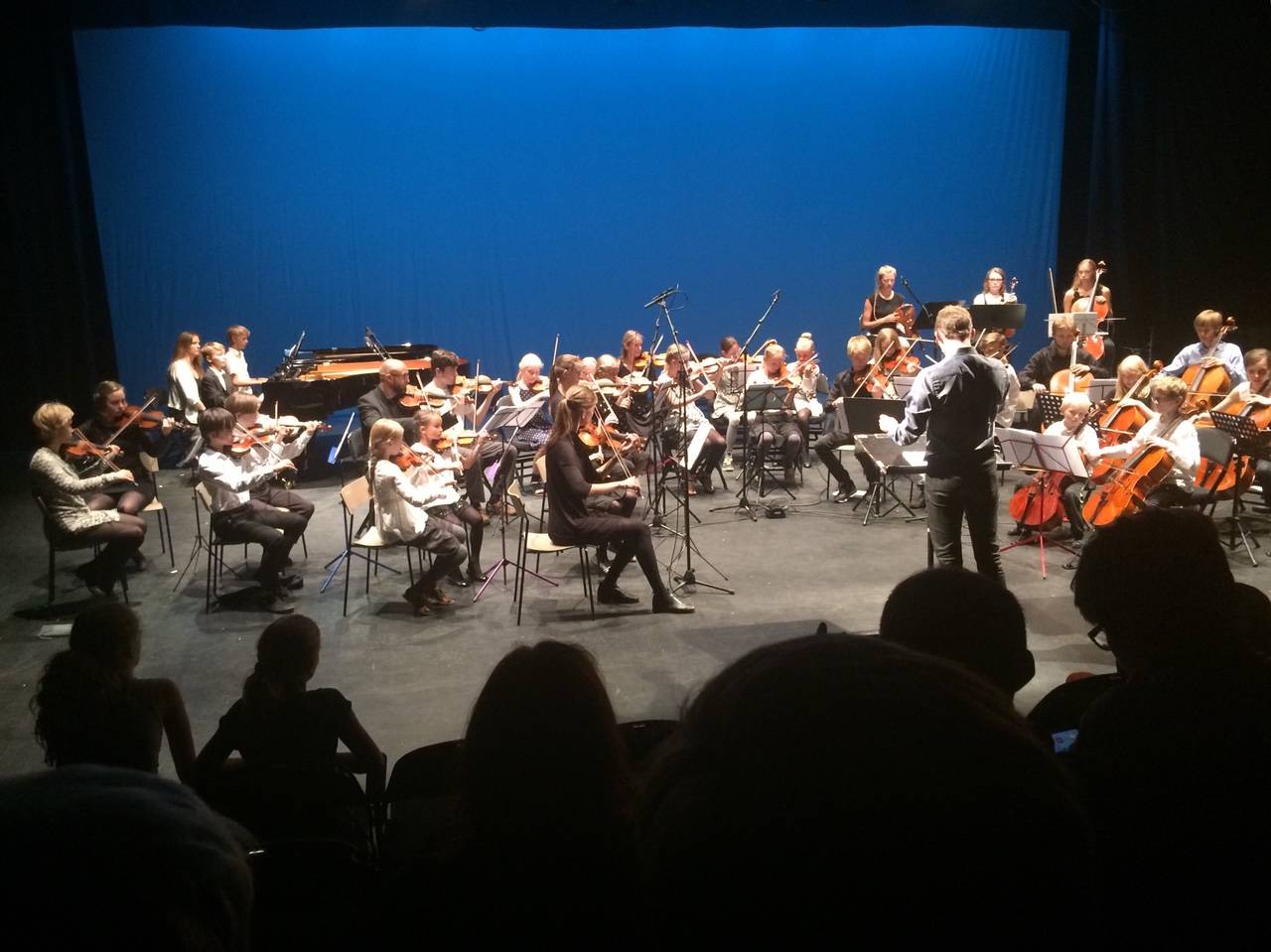
I attended an unusual concert this afternoon: children playing the avant-garde. Compositions by no less than Simon Steen-Andersen and Henning Christiansen, a text score by Carl Bergstrøm, and a large work specially composed for the Suzuki Institute by Peter Due. Rather than having the “see what the children can do” aspect in the foreground, I found myself caught up in experiencing the music.

Earlier in the day I happened to listen to a podcast with Steven Pinker – the cognitive psychologist well known for his theories on language. He had some thoughts on children being able to master a greater complexity of language than hitherto thought possible – and how this plays itself out in children’s books, for example.

100 Days of Something: 62

What are the building blocks that music shares with other capacities?

I came across this video1 of Fred Lerdahl’s lecture on Musical Syntax and Its Relation to Linguistic Syntax. Of particular interest to me since I’ve based a number of pieces of music directly on transcriptions of speech. Lerdahl also covers some interesting points worth considering when thinking of the common ground between music and other (art) forms.

This was the first of a series of three lectures. I haven’t been able to find videos of the following two: The Sounds of Poetry Viewed as Music and Tonal Space, Motion, and Force, but there is a PDF of the second available on Lerdahl’s website.

100 Days of Something: 63

Came across this little article in The New Yorker yesterday – about the changes that occur in the body and brain while drawing. Calming down, being present to life. Those are aspects I fully relate to.

A different mental space from the one one inhabits when occupied with words. The pull of getting things done can be strong though. I did a quick sketch this morning (am always surprised by the way my ears open up when drawing) but ended up spending most of the day busy with code.

100 Days of Something: 65

A little over a month ago I wrote about my search for a way to compress images on my iPad. The kraken.io web interface gives excellent results, but with the catch that images need to be below 1MB to start with if one doesn’t have a Pro account.

I decided to give Pythonista, another of Federico Viticci’s favourites, a go. Version three of the app has just been released and it’s a wonderful way to dive into the world of Python scripting. A beautiful code editor with built in documentation and an integrated debugger that turns out to be invaluable for a first timer like myself.

With some of the included example scripts as a starting point, the documentation, and a look at some of the solutions Frederico and Macdrifter have come up with, I already have an (admittedly basic) working solution for both resizing and compression that works both from within Pythonista and as an extension via the iOS share sheet.