I’d like to return to the Leonard Cohen collection I mentioned a few days ago. There was something else that caught my ear – the little piano melody that separates the verses of the Tower of Song. Almost nothing, a little doodle, and at the same time the most fantastic thing.
It’s from his 1988 I’m Your Man album. I wasn’t particularly impressed when my sister brought it home at the time – it’s only later in life that I’ve come to appreciate the mastery of those songs and their understated almost band-in-a-box but oh so beautifully put together accompaniments.
I took the train down to Suså today. To look over Simon Steen-Andersen’s shoulder during rehearsals of his Black Box Music and get a better understanding of the practical/technical aspects of the piece. It’s a composition that projects events that occur within a sealed-off box on stage onto the space the audience find themselves in. Via video, loudspeakers, and the 15 musicians that surround the public – a large version of the small box, with the public in it and the conductor in the role of soloist. The music itself raucous and fun – at times reminiscent of Spike Jones.
Once again I start writing without knowing what I’m going to write about. And when you don’t know what to write about you write about not knowing what to write about. Of course there are a thousand things to write about, but the mind somehow says that there is nothing. Or at least nothing worth sharing right now.
Speaking of the mind knowing itself I noticed in my twitter feed that it’s John Locke’s birthday today. That was via Brainpickings. I sometimes wonder about the value of dipping into a philosopher in that way – without the full context of Western philosophy.
Consciousness and understanding. Something else I noticed in my Twitter timeline yesterday was Kristian Leth’s post of an interview between Richard Dawkins and Deepak Chopra: An exchange between two formidable minds with very different points of view. Asked for his take on the interview, Kristian replies that Dawkins seldom appears as downtoned as he does here and that Chopra is brilliant in telling of his worldview.
Later on Twitter Kristian asks just what it was that Descartes was thinking – with a string of hashtags touching on the problems (as discussed by Chopra in the interview) resulting from of a mechanistic worldview.
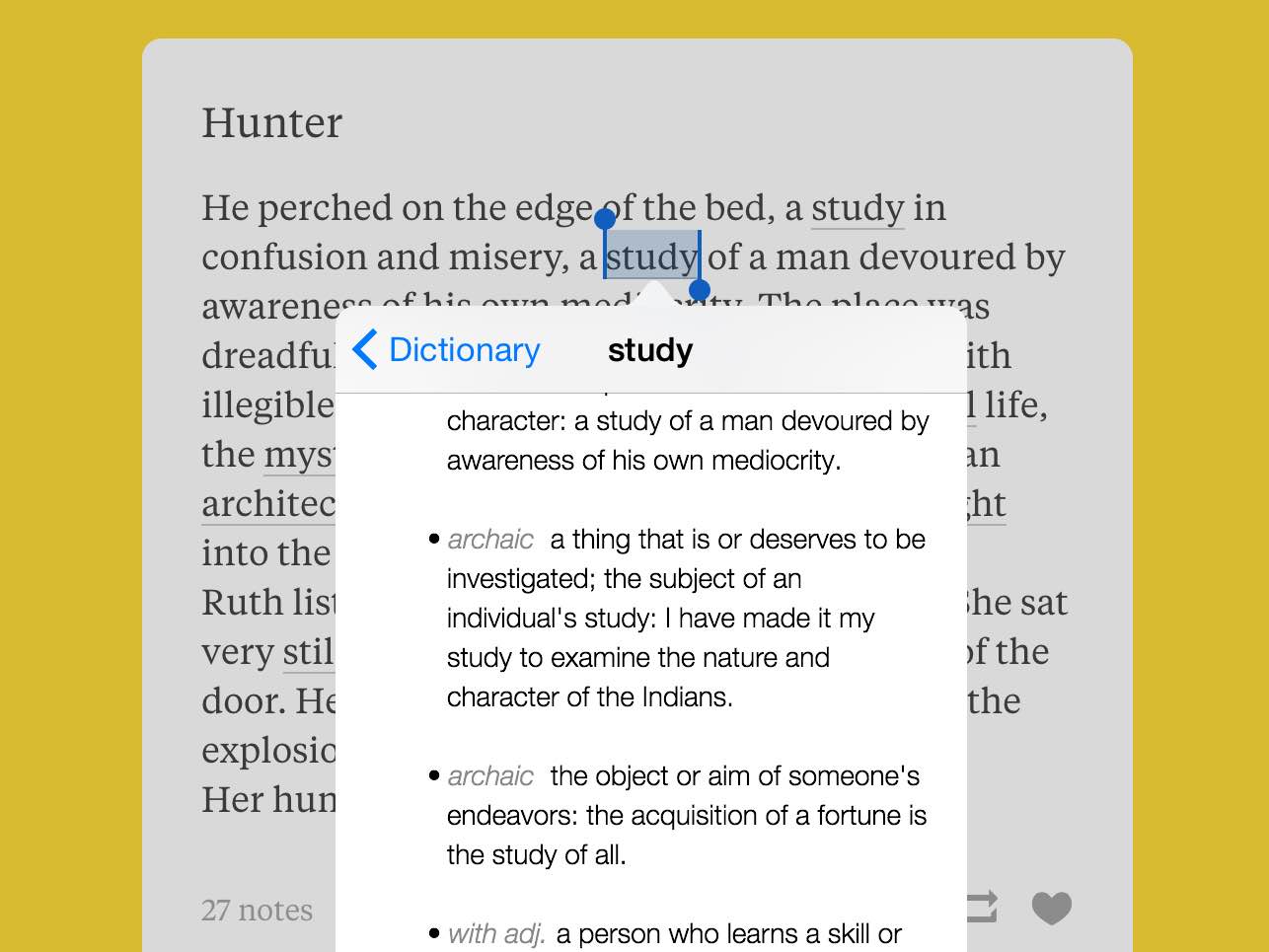
I woke up this morning with the idea that today’s 101 words should be a story – of the literary kind. Thinking of the character that might be introduced, while at the same time scolling through my unread Pinboard bookmarks, I came across Dictionary Stories.
Dictionary sories are short stories assembled entirely from example sentences found in the New Oxford American Dictionary. If you’re using an Apple device that’s what will pop up when you select a word and ask for it to be defined.
Here’s Hunter – if one disregards the title it turns out to be exactly 101 words in length.
Dan Eden is a designer with a few side projects. Digital Ruin is one of them. Small moments of drama, one can’t really call them stories, communicated through what has perhaps become the number one means of communication in our age – text messaging.*
This one is my favourite. Since looking at it I now actually see that little indicator every time I open up iMessage. This one’s quite poignant too.
*We once thought that it would be videophones that were the future, writes Warren Ellis. Who would have guessed that it would turn out to be something closer to a telegram?
Q and A:
John Cage: Hand the answers over to the I Ching and focus on what questions to ask.
Richard Dawkins: “Scientists may be confident that they have the best ways of answering questions. They don’t have all the questions…”
Chip Kidd (on Debbie Millman’s Design Matters): “How is the best solution found in the best definition of the problem itself?”
Morton Feldman: “Problem solving and solutions. There’s a vast distinction between those two words. In problem solving you don’t have to know what you’re doing. We all solve problems in our sleep. And we find solutions when we’re awake.”
An increasing stream in my timeline. 1800 refugees arriving via ferry in Piraeus. Or were they migrants? Immigrants? (I arrived there once via ferry too.) A story about how Denmark in 1956 sent a train to Vienna to offer 1000 Hungarians asylum. The heartbreaking picture of the little Syrian boy. Today, on seeing another photograph of him being carried away, I broke down. Having recently become a parent myself brought the reality of that picture into my body – too close to holding my daughter. Empathy? Politics. But hope too: people gathering at the stations in Munich and Vienna to welcome refugees.
Exhausted, too tired to think, what comes to mind are the news highlights from the last few days: The refugee crisis overshadowing everything else, turning the rest of my Twitter timeline into trivia. Amongst all that the new Google logo is probably the most discussed topic. And amongst all that Matthew Butterick’s take on bright colours cloaking dubious business practices stands out from the offered improvements to kerning and proportions, fascinating as they are.
Europe feeling the pain. Learning. What’s important?
I’d like to use the last words of this note on something constructive, but that’ll have to wait for tomorrow.
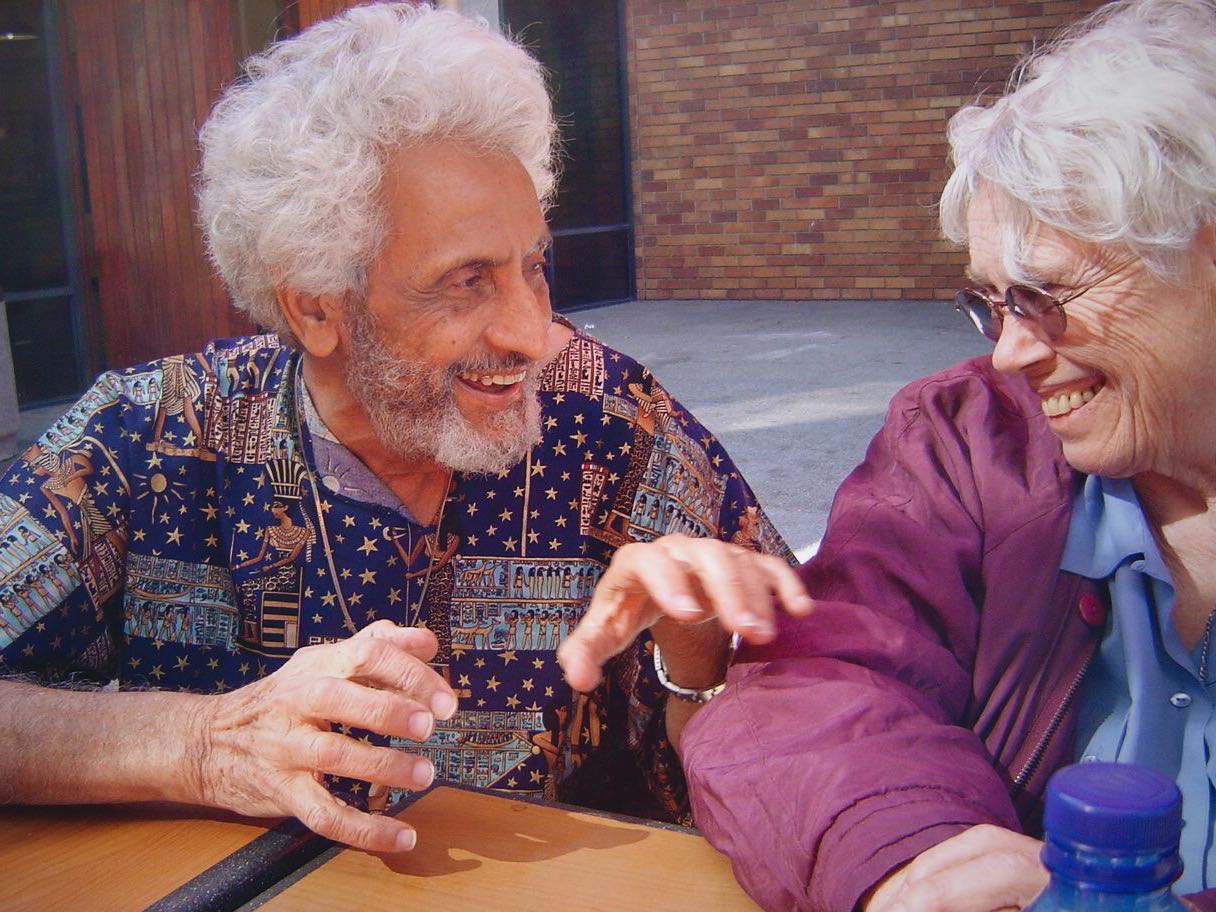
Unyazi, Africa’s first electronic music festival took place from 1–4 September, 10 years ago. Pauline Oliveros and Halim El-Dabh were present and I had the opportunity to interview them. The recording is unfortunately plagued by quite a lot of wind noise and could use a transcription – which I’ve been meaning to get round to. The lacking audio quality is unfortunate since there are some nice sound examples along the way.
Halim for example:
Perhaps some of those bits can be included as aural “pull quotes”.
Aryan Kaganof documented the entire festival as only he can: Unyazi of the Bushveld.