↬ Twenty-six – 09: Helvetica, Home Cooking, Avant-Garde
Hi, I’m Rudiger Meyer, and this is my monthly newsletter covering what I’ve been up to and what’s been catching my attention.
The main thing I’ve been up to is finishing off the Lydfabet I mentioned in my last two newsletters. It’s up on the Poetisk Podcast website and available via Apple Podcasts. Today’s letter is Z, and then in the coming days the final three letters of the Danish alphabet: Æ, Ø, and Å. And then a collected version to round it all off on the 30th.
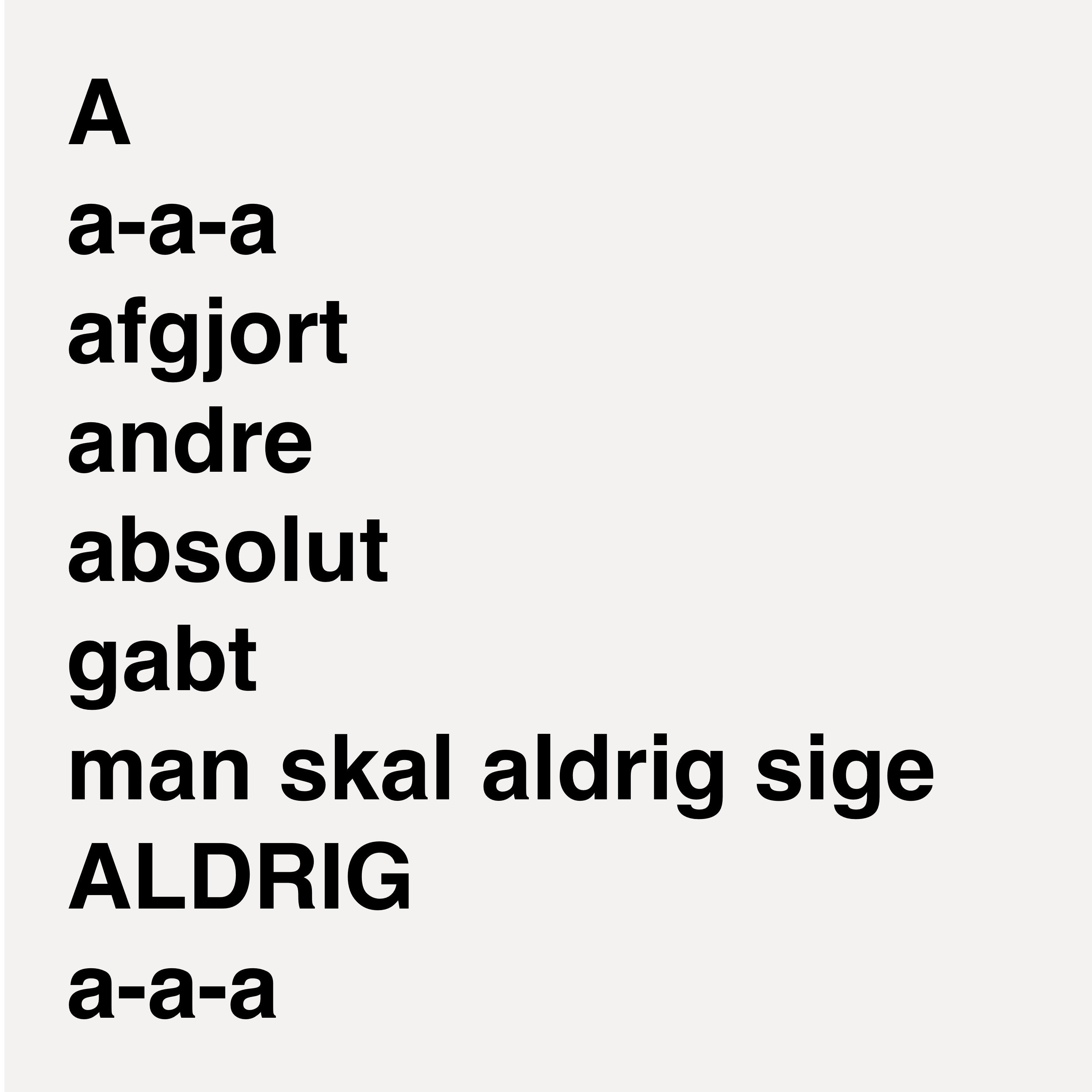
In the last letters the poems play with how sounds and the letters used to indicate them can shift markedly in the Danish language. One can see a particular letter but pronounce another. Learning Italian is much easier: what you see is what you get!
(I also wonder what the vignettes sound like to people not familiar with the Danish language, how it is to relate to them purely on the level of sound – an experience no longer available to myself!)
Working with and presenting these small vignettes one at a time, a day at a time, has been an interesting process. One can give each item a focus that somehow easily gets lost when constantly considering the parts in relation to the whole. It’s been time-consuming, but I feel a worthwhile improvement on the original. And it’s been fun to have them appear as little breaks in the stream of my regular podcast listening.
One aspect that I’ve enjoyed with the podcast version has been including the poem for each letter as the podcast artwork. Modern podcast apps have gotten good at displaying the artwork, and in this case the poems provide a nice visual counterpart.
I was looking around for a font that would feel appropriate, and ended up with good old Helvetica. Vagn’s PC printouts of the poems were simply with Times New Roman, but looking at some of his concrete poetry posters from the 60s and 70s, Helvetica seemed more appropriate. And it’s a typeface that looks good in bold at a display size. For some reason I feel happy seeing them presented that way. Design Docs, whose YouTube channel I’ve mentioned before, has a fine episode on Helvetica’s history and use.
* * *
Speaking of typography, I chanced across a post by Joe Gilmore on Mastodon trying to track down the font used in some George Brecht conceptual music pieces from the 70s. That turned out to be IBM Registry, a proportional space font for the IBM Electric Typewriter. There’s a nice presentation on Fonts in Use of Water Yam, Brecht’s artist’s book (box) containing 70 small event scores. (Those IBM typewriters did a lot of good work back in the day. See e.g. Walter Zimmerman’s IBM Selectric Desert Plants, mentioned back in one of my first newsletters.)
* * *
W. David Marx’s Good Taste is Not What’s Oppressing Us in 2026 appeared in my inbox, and I found it an interesting take on the notion of the ‘Avant Garde’ and where we find ourselves in relation to it in terms of its economic, social, and cultural aspects.
Some of it connects up to themes in the Nik Bärtsch interview I mentioned in my June newsletter. In some ways, a fresh perspective on what I was trying to think through back in 2013.
* * *
And then, of course, there’s AI: Jeremy Keith posted about thinking locally on his website, referring to Robin Sloan’s thoughts about ‘apps as home-cooked meals’ – a discussion around personal software, “designed and built in different ways, for different reasons, than industrial apps” – and how the AI age has supercharged all that.
And on the other side of that coin, JA Westenberg:
AI gives you infinite content made just for you. That’s exactly the wrong problem to solve.
Culture scales through shared experience, not customization. A perfect private AI film gives you nothing to hand anyone else… Humans don’t want more content. We want common ground.
The main focus of his video is ‘content’, but he touches on apps as well:
Because an app is not just functionality, an app is a community. Nobody loves Notion because of the database features alone. They love the civilization around Notion, the templates, YouTube tutorials, the consultants, the Reddit threads, the shared vocabulary of blocks and pages. When you’re stuck, 10,000 people have been stuck in the exact same way and blogged their way out of it. When you build something clever, there’s an audience capable of appreciating the cleverness. The tool is the smallest part of the product because the product is the tribe. Your personal prompted app has no tribe, no tutorials, no forum, no ecosystem, no one to learn from or show off to…
At the same time I have a soft spot for people building their own little things away from the glare of ‘the tribe’. The old distinction between ‘Art’ and ‘Culture’: Art (or craft) can become Culture but doesn’t start that way. Perhaps the above is particularly connected to the unreflected ease of AI prompting your own little things, although I’m not even sure about the ease of that process. See Jon Hicks’ write-up on creating a digital music player app, or Robin Sloan’s own reflections on being pulled into a ‘continuous co-building’ rabbit hole.
Understand: if you embark on this exploratory program, it will become your hobby for the next few weeks. It will be the thing you do in the quiet of the morning, over coffee, or in the quiet of the evening, before bed.
Back to where we started with Jeremy:
My issue with large language models has never been the actual technology, which is genuinely fascinating. My issue is with the power dynamics, of being robbed of agency, of the over-inflated hype and criti-hype being used to convince us of an inevitable future where a small group of very rich men are masters over our lives.
I’d love to see the technology decoupled from the current depressing narrative. I’d love to see a thousand homemade software flowers bloom from open local language models.
* * *
To counter all that, here’s a website with some delightful ‘home-made/hand-made’ (web) clocks, no prompts involved.
All the best,
↬ Rudiger
P.S. I appreciated Kristaps Andrejsons’ passionate and dedicated two-and-a-half-hour History of Non-Elections on the Eastern Border podcast.
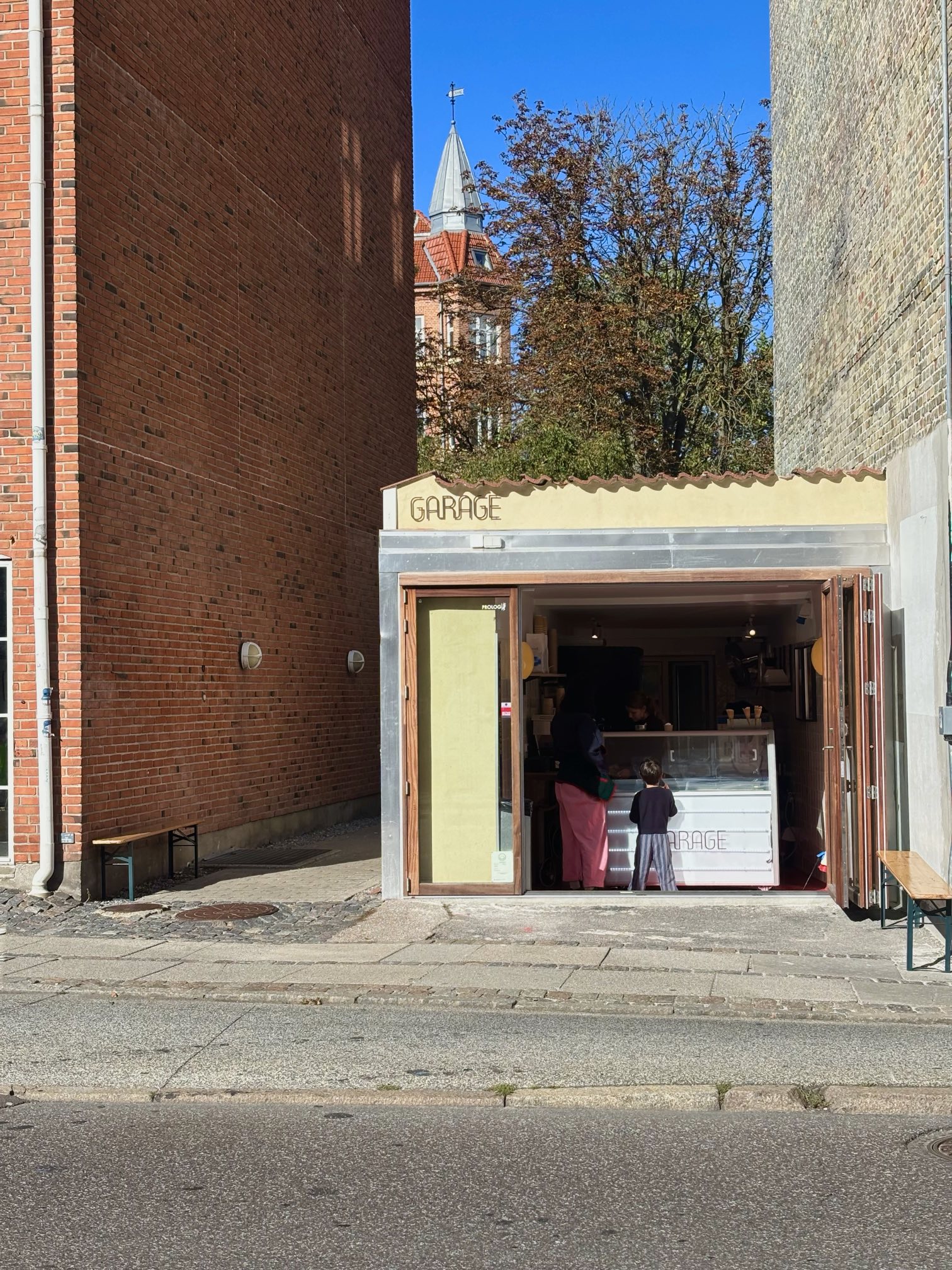
And finally, for fun, a little reminder that the world is still full of weird and wonderful surprises.
