↬ Twenty-three – 09: Africa, Electronics
Hi, I’m Rudiger Meyer and this is my monthly newsletter covering what I’ve been up to and what’s been catching my attention.
After reaching a point of near completion with the Audulus Scales Module, I’ve turned my attention to the Tunings Module that I was working on earlier this year, expanding it from its mini ‘tile’ form to include a visual display – and that’s been a lot of fun. I’ve very much enjoyed being able to see the differences between all those tunings layed out visually, and, since I’d for reasons of practicality split many of the tunings into ‘upper’ and ‘lower’ sections (like split keys on a keyboard) those (potentially dynamic) changes are now a lot clearer. Adding the visual wheel helps clarify how the module works.
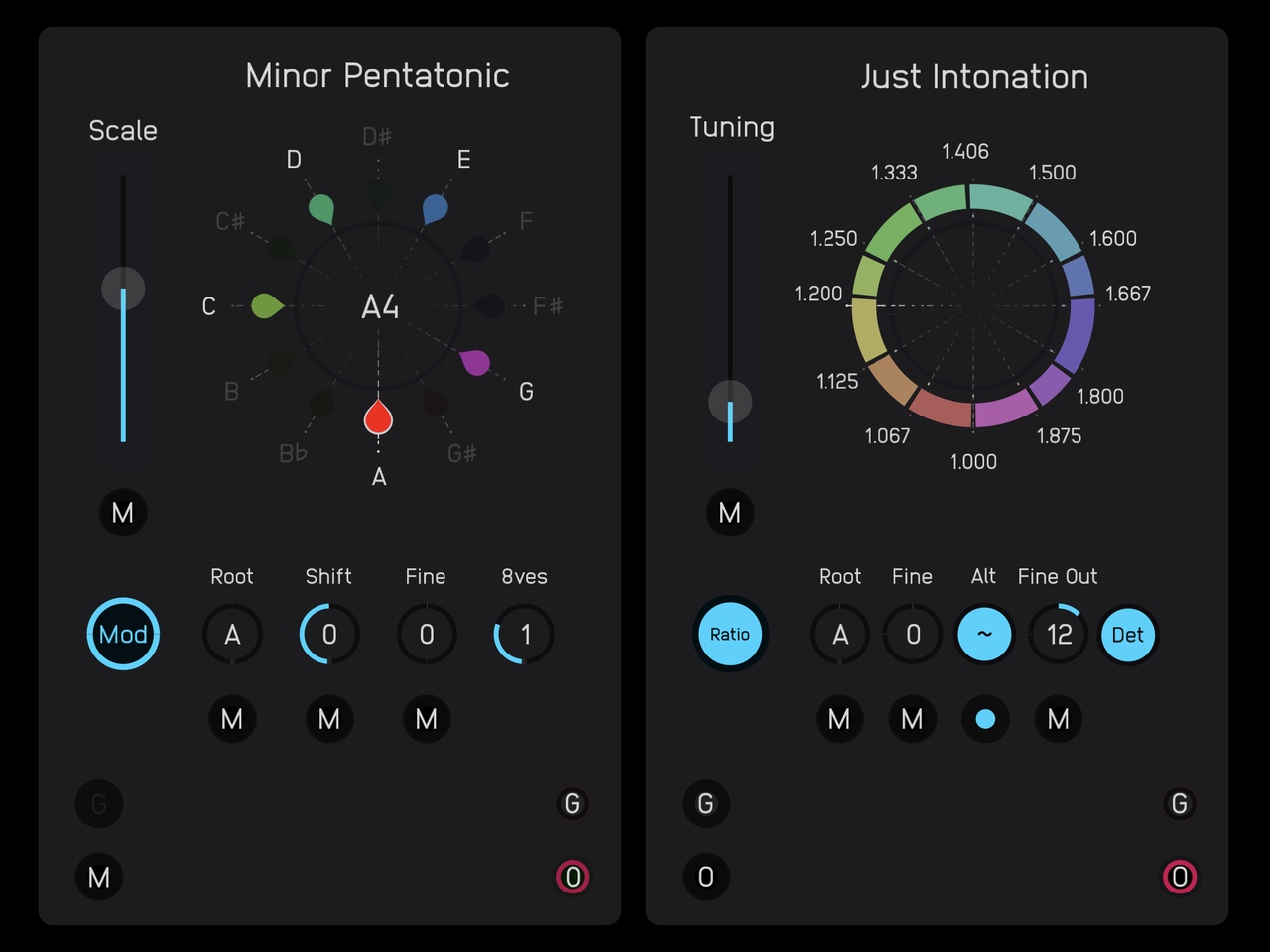
Both the Scales and Tuning modules have now also been altered to fit in with the standard sizes of the Audulus module library – with corresponding adjustments to the UI both in terms of the placement and size of the elements. It’s been a long and gradual process over many months (for what seemed like pretty straightforward utility items) a co-creation with many a (much appreciated!) back and forth between Jeremy Smith and myself. At each turn discovering further details to tackle – how to map the input of a continuous pitch knob: at which point should should it ‘snap’ to the next degree of a scale, for example. How should the display respond to polyphonic input when using it with a MIDI keyboard, and so on.
Still not quite a v.1, but getting there. I’ll post it to the Audulus Discord soon.
* * *
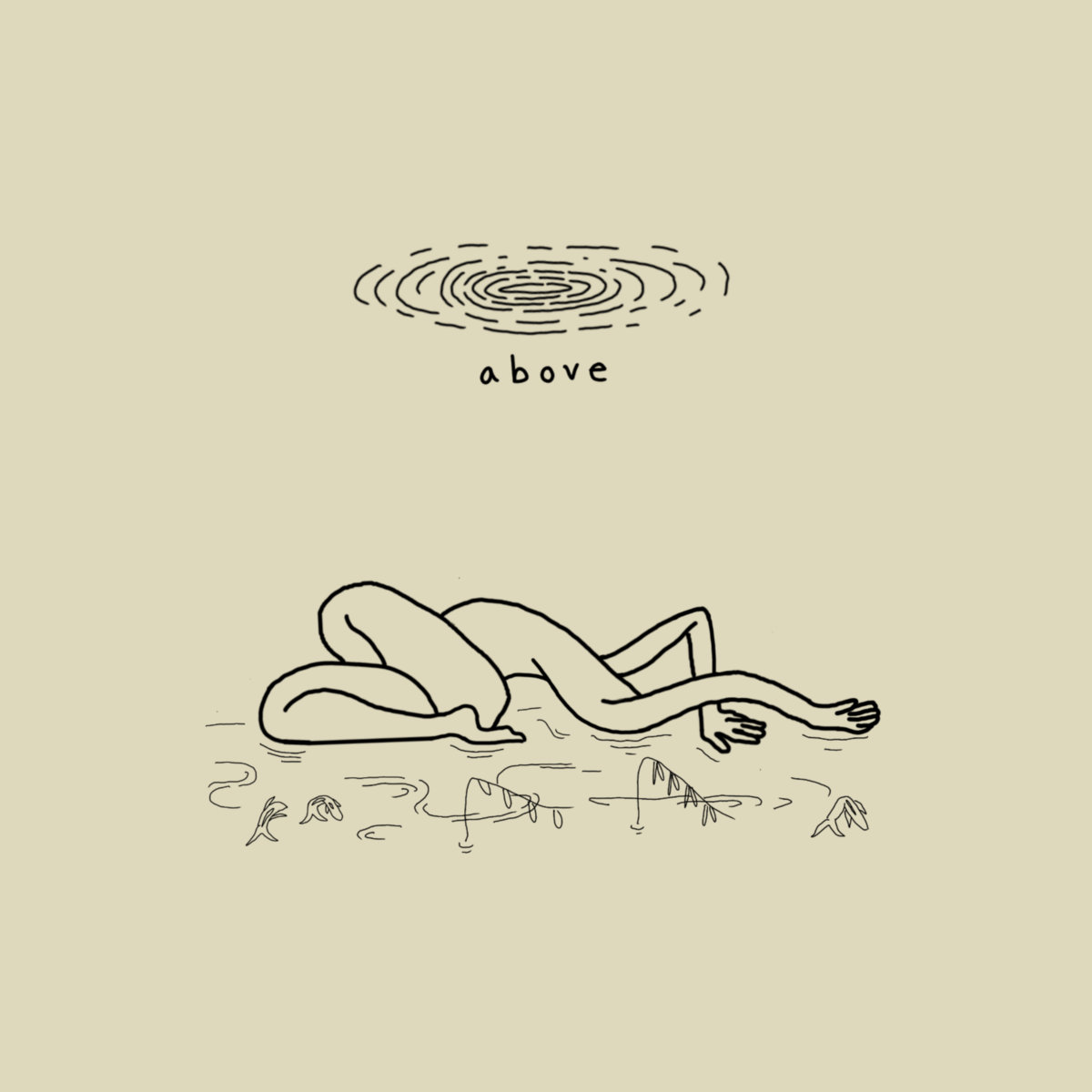
Having played around with the Tunings module quite a bit while testing things out, my ears have perhaps become extra sensitive to subtle pitch movements, and so I’ve been delighted by Don’t Look Back Records recent release of Minami Saeki’s above. Sparse single tones on voice and acoustic guitar (panned hard right and left) with very subtle glides in the voice part creating brief moments of beating against the stable points of the guitar. It’s recorded close up, which works very well, and given its subtlety one’s tempted to listen with headphones – but that takes away the beating, so best without!
* * *
Since the demise of Twitter I’ve no longer been keeping up to date with what Schwebung (Stephan Mathieu) has been up to – his posts sharing recently mastered projects were always a good way of discovering new releases. But I remembered that he has a Buy Music Club page – basically just a (nice, clean) shop window for things on Bandcamp, a useful overview. One of his September releases is Sept duos pour guitare acoustique & piano préparé by Stephen O’Malley & Anthony Pateras, beautiful recordings of acoustic (steel-string) guitar and prepared piano. Sparse, as with Saeki, though not to the same extreme, with many beautiful beating timbres from the prepared piano.
* * *
Another of Mathieu’s recent masterings is the Unseen Worlds release of John McGuire’s Vanishing Points / A Cappella.
A conversation with sculptor Hans Karl Burgeff led McGuire to think beyond the horizon and into limitless space. For “Vanishing Points” (1985–1988), McGuire used an entirely digital set-up for the first time: a digital sequencer, eight Yamaha DX-7 synthesizers and a Studer 24-track digital tape recorder. The piece was conceived as a “sequel” to the Pulse Music series, but also a step forward from it. Whereas the Pulse Music pieces had employed steady streams of pulses, with Vanishing Points McGuire employed pulse layers that accelerate or decelerate against one another, vastly increasing the resulting rhythmic complexity.
McGuire’s exploration of music technology continued in “A Cappella” (1990–1997), written for his wife, the soprano Beth Griffith, known for her recording of Morton Feldman’s “Three Voices” made in 1983. Using samples, he created a four-voice choir of voice samples and arranged them into interacting parts. The composition faced challenges due to the organic nature of the human voice compared to the precision of synthesized sounds. This process involved extensive editing and a negotiation between the “material” and the “original conception”. This sort of negotiation applies as much to the composition of a single piece as it does to the work of two decades.
(See the full liner notes.)
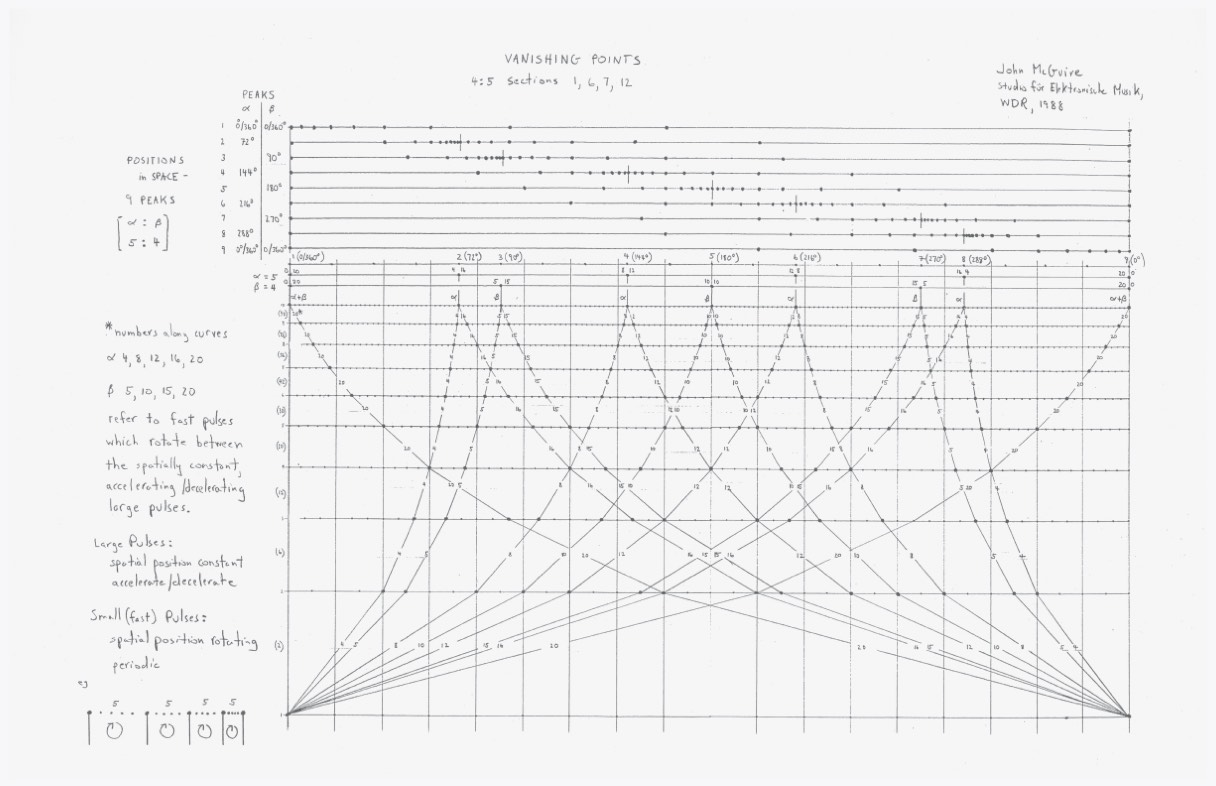
The pieces have previously been available on a Saragasso release, but I find it astounding how good the new mastering is – how much it adds to these works in getting the sounds across so clearly. A delight.
* * *
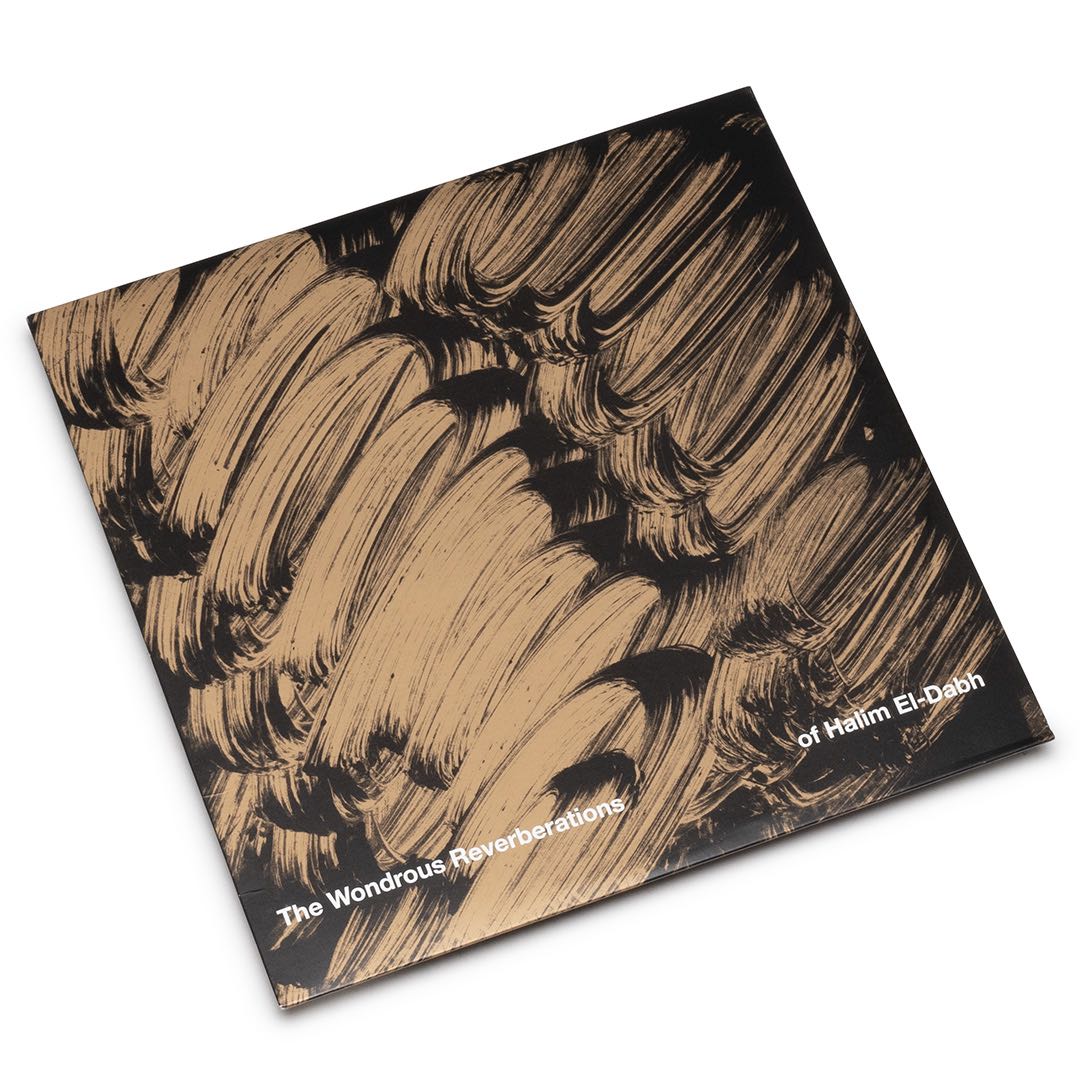
Flint Magazine, an ‘experimental art journal’ multimedia art magazine in a box recently produced a vinyl album of music by Halim El-Dabh, and, to celebrate the release of the record, organized a ‘Halim El-Dabh day’ through Radio Alhara. Maia Asshaq, a writer and editor at the magazine had discovered the interview I did with Halim and Pauline Oliveros at the Unyazi festival in South Africa back in 2005, and wrote asking if I’d mind having the interview included in that twelve hour radio block.
It’s always a delight to discover that people do, from time to time, discover things I have on the site, and get something out of it.
Someone else that discovered that same interview is Nyokabi Kariũki. Here’s her lengthy reflection On learning that one of the first electronic works was by an African, Halim El-Dabh.
And keeping the party going, Peter Kirn also posted on Halim at CDM a few days ago.
(The Leila Visitations Seven is a track that particularly caught my ear when I first came across Halim’s Crossing into the Electric Magnetic back in 2005.)
* * *
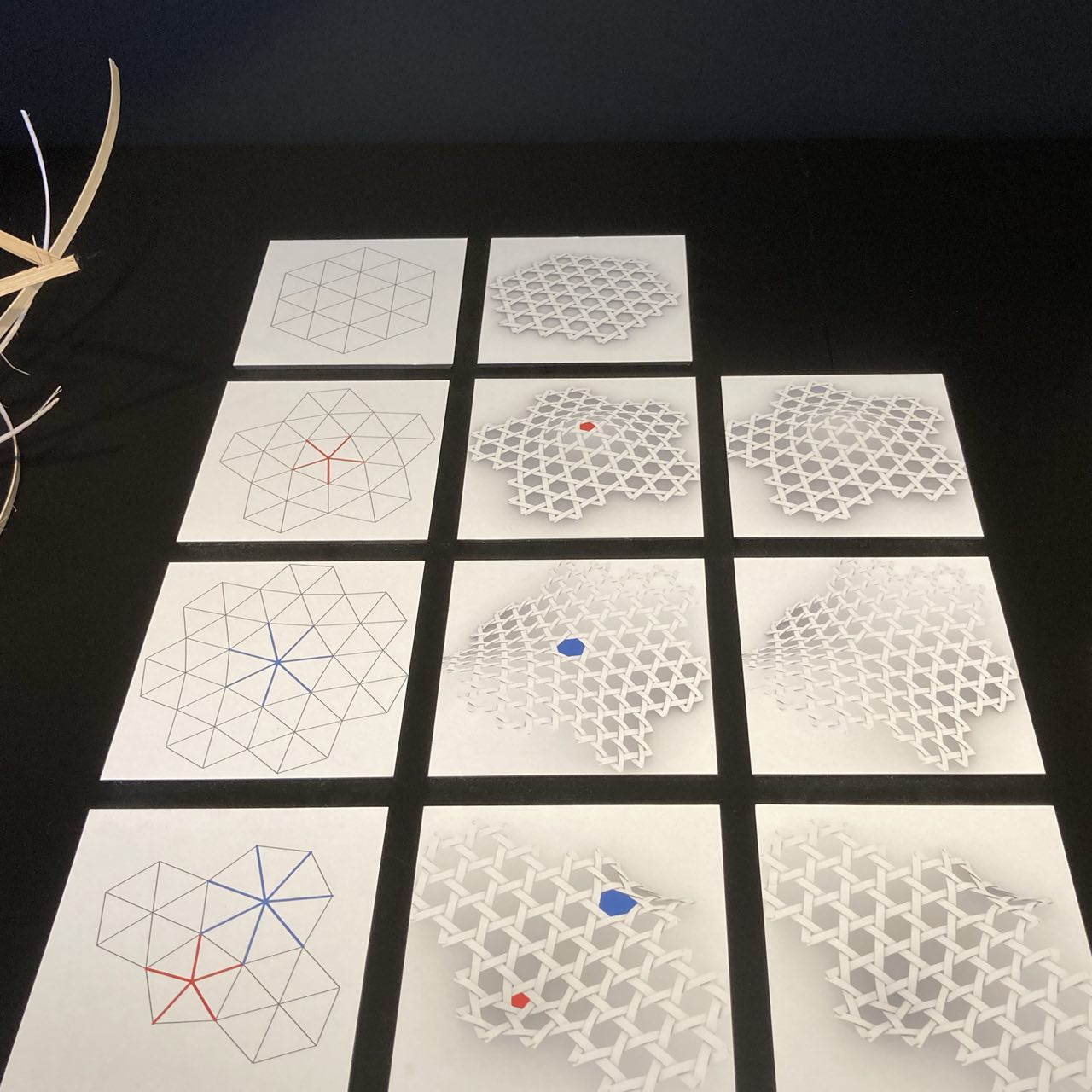
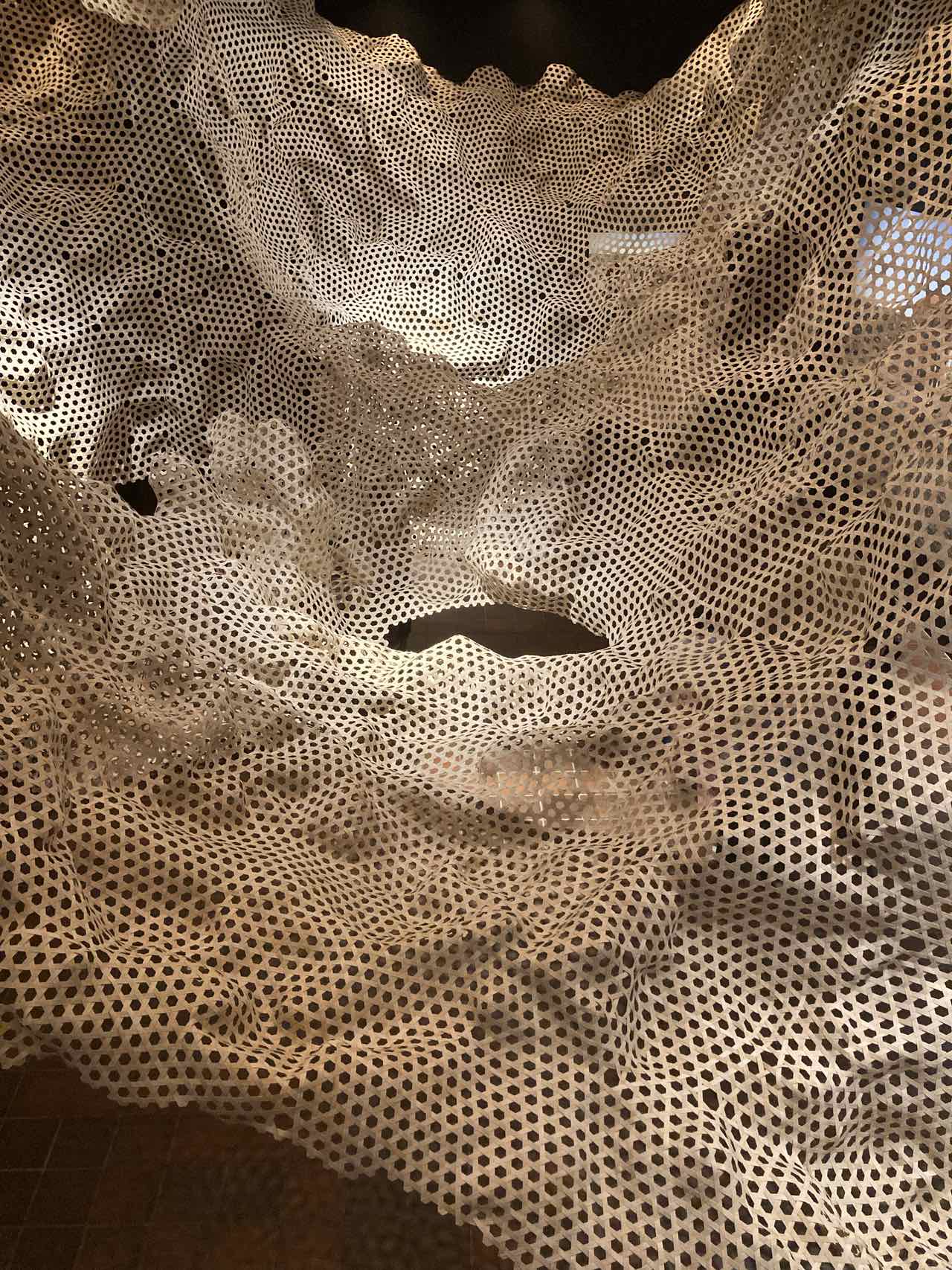
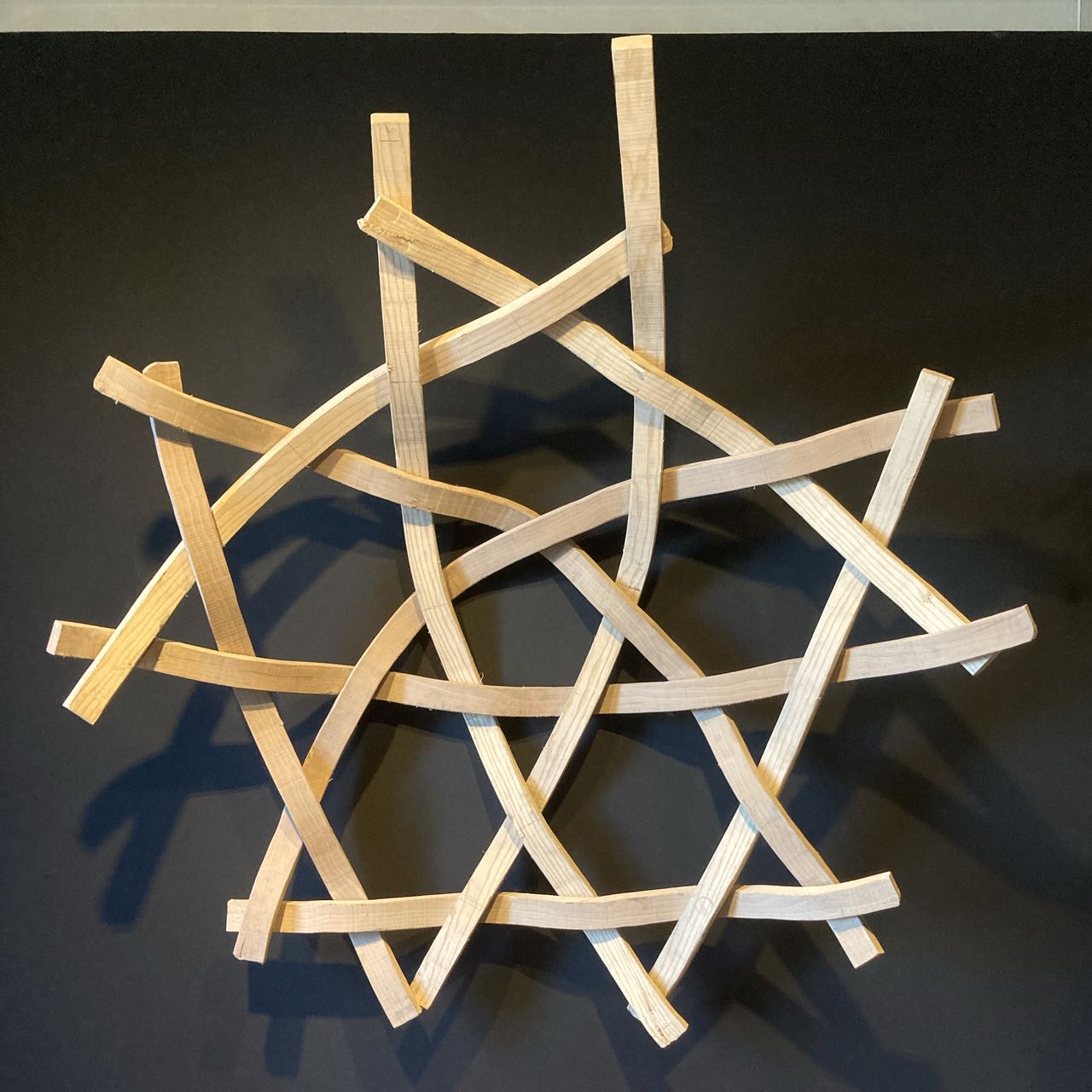
Weaving further on Nyokabi’s African thread, here are some photographs of Kenyan weaving patterns from the Cave Bureau exhibition at the Louisiana Art Museum – the last in their Architecture series. Halim and Pauline’s ‘African mathematics’.
* * *
In keeping with the African cave theme, something else that I came across on that recent Louisiana visit was William Kentridge’s Sibyl, a 10 minute ‘flipbook-film’ created as part of Waiting for the Sibyl, a chamber opera for the Rome Opera – on the invitation to create a counterpart to Alexander Calder’s Work in Progress, “a beautiful, whimsical almost-happening” from 1968.
I was reminded of the image of the Cumaean Sibyl. My understanding of her story was that she lived in her cave near Naples; people would come to her with questions about their fate, and she would write the answers on oak leaves. There would be a pile of oak leaves at the front of her cave and people would come to get their answers. But inevitably there would be a wind which blew the leaves around – so you never knew if you were getting your fate or somebody else’s fate.
The vocal music for Sibyl (here’s a short excerpt, otherwise scroll down on the Waiting for the Sibyl page for a longer three-minute excerpt) was composed by Nhlanhla Mahlangu for six singers, and has some amazing singing. I particularly enjoyed the nasal quasi-overtone singing reminiscent of African bow music.
And that thread, as well as the one of African electronics, can be followed further on Bowscapes, an album in memory of Jürgen Bräuninger that grew out of the Bow Project.
All the best,
↬ Rudiger
